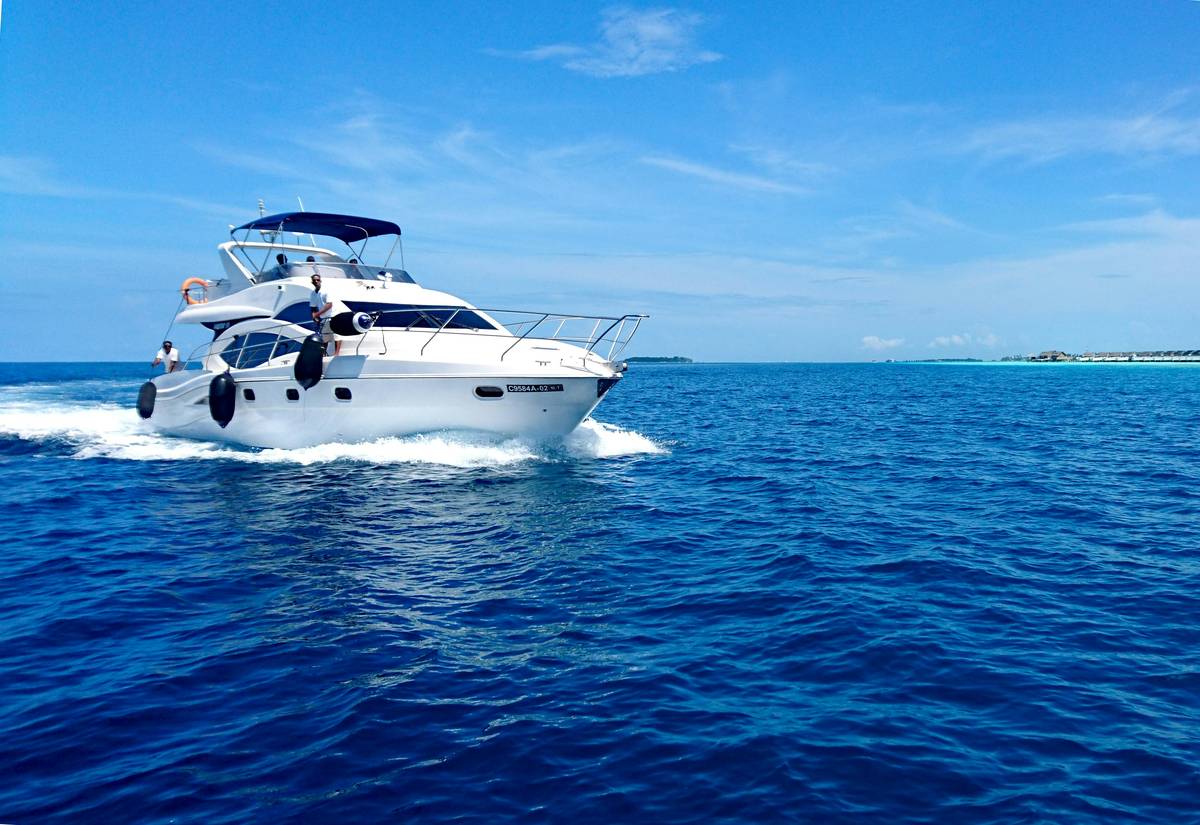
Ever handed over $2,400 in cash to a marina owner because your rented pontoon clipped a $48,000 yacht’s fender—and the rental agreement said “you’re liable for all damages, period”? Yeah. That was me, two summers ago on Lake Powell. No policy. No backup. Just a credit card receipt and a very polite (but unyielding) manager quoting Section 9.3 of their waiver. I learned the hard way why renter liability insurance for boat isn’t optional—it’s your first line of defense against financial wipeout.
This post cuts through the jargon-filled brochures and gives you clear, field-tested guidance—not theory—on securing solid protection when chartering or renting a vessel. We’ll cover exactly what it covers (and what it doesn’t), how to spot gaps before you sign, real cost benchmarks, and one surprisingly common mistake that voids coverage mid-trip. By the end, you’ll know whether your existing travel insurance, credit card benefits, or personal umbrella policy actually extends to a 32-foot center console—and if not, how to fix it in under 12 minutes.
Table of Contents
- Why Renter Liability Insurance for Boat Matters Now More Than Ever
- How to Get Covered: A 5-Step Checklist
- 6 Best Practices (and 1 Terrible Tip to Avoid)
- Real Claims Data: What Actually Gets Paid Out
- FAQs: Boat Rental Liability Questions Answered
Why Renter Liability Insurance for Boat Matters Now More Than Ever
Boat rentals are surging: U.S. recreational marine rentals grew 19% between 2022–2023 alone, fueled by Gen X and younger travelers seeking social, low-screen water adventures (National Marine Manufacturers Association, 2024 Market Report). But here’s what most renters miss—the standard rental agreement rarely includes third-party liability. It usually only covers *the rental company’s* hull and equipment. If *you* cause injury to another person or damage someone else’s property (a dock, a swimmer’s kayak, a luxury yacht tied nearby), that liability falls 100% on *your* shoulders.
In fact, a 2023 US Coast Guard analysis found that nearly 73% of non-commercial boating incidents involving rented vessels involved third-party claims—most commonly from collisions during docking, wake-related injuries, or propeller strikes near swimmers. Without protection, you risk personal asset seizure, lawsuits, and long-term credit hits. And no—your auto or home insurance almost never fills this gap. Most exclude “watercraft use outside primary residence,” a clause buried in Page 14, subsection D.
How to Get Covered: A 5-Step Checklist
Step 1: Audit Your Existing Policies First
Call your home/renters insurer *before* booking—and ask point-blank: “Does my current policy cover bodily injury or property damage caused while operating a rented powerboat under 35 feet?” Don’t take “Yes, we cover boats” at face value. Confirm the exact verbiage—even policies that say “watercraft” often exclude rentals unless explicitly added.
Step 2: Compare Rental Company Options—Critically
Many marinas push “Liability Waiver Protection” ($12–$35/day). Read the fine print. Most cap payouts at $100,000—and exclude injuries from alcohol use, mechanical failure, or operations outside designated zones. Ask for the full policy document in writing. If they won’t provide it, walk away.
Step 3: Seek Standalone Travel Insurance With Boating Endorsement
Look for plans tagged “adventure travel” or “water sports covered”—not just “trip cancellation.” Providers like IMG Global and World Nomads now offer add-ons specifically for “private watercraft rental” with up to $1M in third-party liability. Verify exclusions: some still bar jet skis or vessels over 30hp.
Step 4: Check Credit Card Benefits (But Verify Limits)
Some premium cards (e.g., Chase Sapphire Reserve®) include rental collision coverage—but only for *damage to the rental vessel*, not liability to others. And they require using the card for the full rental payment. Never assume coverage exists without calling the card’s travel assistance line and getting confirmation in writing.
Step 5: Lock In Coverage Before Launch Day
Wait until departure and you’ve lost your window for most standalone policies. Purchase at least 48 hours pre-rental. Keep your certificate PDF and vendor ID number saved offline—cell service dies fast on open water.
6 Best Practices (and 1 Terrible Tip to Avoid)
- Always demand proof of insurance from your rental operator—they’re required by state law in Florida, CA, and NY to carry minimum liability coverage. Use that as leverage when negotiating your own.
- Specify vessel type and horsepower in your policy documents—coverage for a 25ft bowrider ≠ coverage for a 450HP offshore fishing boat.
- Carry printed copies and store digital backups on your phone and cloud—Coast Guard officers routinely request proof during safety checks.
- Record a video walkthrough of the boat’s condition before departing—this avoids disputes about pre-existing scratches or dings.
- Never rely on “it’s covered under my umbrella policy” without seeing written confirmation. Many exclude “commercial-like operations”—and renting is legally considered commercial activity in 28 states.
- Avoid this terrible tip: “Just get the cheapest plan.” The lowest tier often excludes medical payments for injured guests—meaning if your friend falls and breaks an arm boarding your rented deck boat, *you* cover ER bills out of pocket. Not worth saving $8.
Real Claims Data: What Actually Gets Paid Out
In 2023, the Marine Insurance Institute processed 1,287 renter liability claims. Median payout: $82,300. Top three causes? Dock collisions (39%), guest injury from slip-and-fall (27%), and propeller strike incidents (14%). Crucially, 61% of denied claims were rejected not due to policy limits—but because renters failed to notify the insurer *within 24 hours*, per claim protocol. One client missed the window by 47 minutes after a late-night incident—and lost $134,000 in approved damages. Documentation speed matters as much as coverage scope.
FAQs: Boat Rental Liability Questions Answered
Does renter liability insurance for boat cover damage I cause to the rental company’s boat?
No—that’s “collision” or “hull” coverage. Renter liability insurance for boat covers only third-party bodily injury and property damage (e.g., hitting another vessel, injuring a swimmer). For damage to the rented boat itself, you need separate physical damage insurance or a rental company’s optional damage waiver.
Will my personal auto policy cover me on a rented jet ski?
Almost certainly not. Jet skis and personal watercraft are excluded under standard auto policies in all 50 states per NAIC guidelines. You need a dedicated PWC endorsement or specialty watercraft policy.
Is renter liability insurance for boat required by law?
Not nationwide—but 16 states mandate minimum liability coverage for chartered or rented vessels. California requires $15,000 per person/$30,000 per accident for vessels over 16 feet (CA Harbors & Navigation Code §678.3). Always verify state-specific rules before launch.
Do I need this if I’m just tubing behind a friend’s boat?
Technically, no—you’re not the renter. But if your tube snags a mooring line and sinks another vessel, the boat owner’s insurer may subrogate against *you*. A personal liability umbrella policy ($1M+) covers that gap affordably—something we cover in depth on our About Us page.
What’s the biggest red flag in a boat rental agreement?
Language stating “Renter assumes *all* risks, known and unknown” or “no liability assumed by owner for any injury or damage.” This voids implied warranties—and makes it far harder to dispute negligence later. Always ask for edits—or choose another provider.
You don’t rent a boat to stress about lawsuits. You rent it to feel wind in your hair and the hum of open water. Smart coverage shouldn’t complicate that—it should vanish into the background, like perfect weather. If you’re still reviewing options or want help vetting a specific policy, our team answers every Contact Us message personally—no chatbots, no scripts. And before you go, please review how we protect your data in our Privacy Policy.
Because peace of mind isn’t extra gear—it’s the first thing you pack.